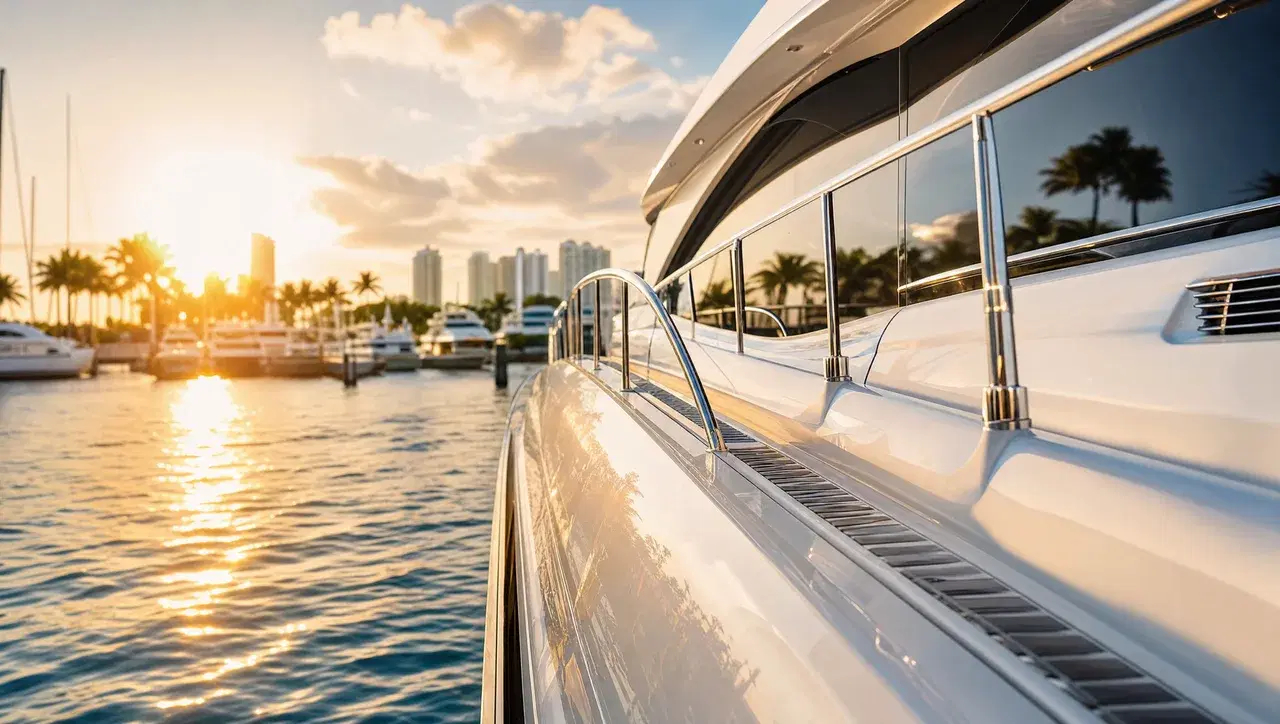
Hurricane Season Yacht Prep: A South Florida Owner's Checklist is the staged set of tasks that protect a vessel between June 1 and November 30. It covers dock-line replacement, seacock service, canvas stripping, haul-out decisions, and the post-storm walkthrough before you turn a single key. Done right, the work spreads across seven months. Done wrong, you're scrambling at 3 AM with a Cat 2 sixty miles off Bimini.
Hurricane prep for a South Florida yacht isn't one afternoon's work. It's a staged process that starts in late April and runs through November 30. This checklist covers what to do before the season opens, how to tighten the boat as a storm tracks toward South Florida, and what to inspect the morning after the all-clear drops.
Why does South Florida's hurricane season demand a different prep standard?
The peak window runs August 15 to October 15, and a named storm can spin up off the Bahamas with less than 72 hours of usable warning. That's not enough time to source new dock lines, find chafe gear, and call your insurance carrier. Last-minute prep is a losing strategy here.
Storm surge pushes saltwater-saturated air across every exposed surface, and that air eats unprotected aluminum cleats, stainless rails, and unsealed electronics. Corrosion prevention and storm prep are the same job. The two checklists overlap.
Palm Beach County, Broward County, and Miami-Dade County all sit in high-risk coastal zones, but the marina rules vary. Some yards close their haul-out list on May 15. Others run a first-come system that fills by mid-July. Liveaboard evacuation rules differ slip to slip. According to NOAA advisories, the Atlantic basin's most active stretch lines up with the worst of South Florida's afternoon thunderstorm season, so the boat gets hammered even in quiet weeks.
Insurance riders for named-storm damage almost always require documented prep. A claim adjuster who finds undocked canvas and undoubled lines after a loss will reduce or deny the payout. Hull Renew, LLC keeps photo records for clients who carry storm-damage agreements requiring proof of pre-storm condition; check with your carrier about what their warranty and agreement language actually demands.
What should you do before June 1 to get ahead of the season?
Pull every dock line off the boat and inspect each one. Look for chafe through the cover braid, UV brittleness at the splice, and diameter that's actually rated for your displacement. A 64' Viking sportfish doesn't ride on 5/8" line. It rides on 7/8" minimum, with eight lines, and most dock hands won't put that gear on for you. You buy it, you rig it.
Service every through-hull seacock. Open, close, and grease each one. Test thru-hull integrity at the same time, and confirm both bilge pump float switches kick on before the first tropical wave forms off Africa.
Photograph every surface of the vessel. Hull, deck, transom, hardtop, stanchion bases, the underside of the swim platform. Gelcoat cracks, blister patches, and compromised paint are water-intrusion points in sustained rain, and you want timestamped photos before the storm, not after. Per BoatUS guidance, dated photo records carry weight with claims adjusters.
Read your marina contract. Find the storm haul-out language. Get on the yard's pull list at Rybovich, Harbour Towne, or your home marina before those lists close, because they close earlier than most owners expect.
How do you tighten the boat when a storm is 96 hours out?
Double every dock line and add chafe guards at every contact point: hawsepipe, chock, piling. Run breast lines to pilings on both sides of the boat, and rig spring lines at roughly 45 degrees fore and aft to absorb surge motion. The water won't just rise. It'll oscillate, sometimes four feet in ninety seconds.
Strip the canvas. All of it. Biminis, enclosures, side curtains, the cockpit shade, the flybridge cover. In a 60+ mph gust, fabric is a sail, and a sail tied to a stanchion will tear the stanchion out of the deck. Furl headsails tight and put three sail ties on the main if you've got rags.
Pull the cockpit and flybridge clear. Cushions, fishing rods, electronics, the cooler, the boathook, anything loose over about two pounds. Storm winds turn those into projectiles. A 12-pound tackle box thrown through a salon window costs more than every hour of prep you'll do all season.
Close ports, hatches, and seacocks. Wrap exposed electronics in plastic and tape the seams. Stuff rags into deck drains that could back-flow during surge. It's tedious work and the boat looks ridiculous when you're done. That's fine.
Should you haul the boat or ride it out in the slip?
A vessel on the hard in a quality yard with proper jack stands survives most Cat 1 and Cat 2 events better than any in-water option. If the yard still has space, haul-out is almost always the right call. Most yards won't take a late booking, which is why the May 15 list matters.
In-water survival depends on the marina's floating dock system and the holding capacity of the pilings. Ask the dockmaster for piling specs, not reassurances. A floating dock rated to 20-foot piling depth in 8 feet of water column is a different conversation than fixed-finger piers from 1978.
Vessels over roughly 80 feet often can't be hauled on short notice. Those owners need a storm-mooring plan with redundant lines, a generator-backed bilge system, and someone physically checking the boat every few hours through the event. That someone is usually the captain, and the captain needs a written agreement with the owner about liability before the storm forms, not during.
Anchorage in a charted hurricane hole is a fallback. Know your ground in May, not during a storm watch. South Florida has a handful of protected basins, all of them crowded the moment a cone forms, and the boats with anchors set first take the best spots.
What does a post-storm inspection cover before you start the engine?
Check bilge levels first. Salt-saturated bilge water smells sharp and metallic; fresh rainwater accumulation smells like wet carpet. The difference tells you whether a through-hull backed up under surge load.
Inspect the hull above and below the waterline. Look for impact damage, stress cracking at the hull-deck joint, and gelcoat fractures that weren't there in your pre-storm photos. Run a fingertip along the rub rail. If you feel a new spider crack, mark it with tape and photograph it.
Test electronics dry before you switch a single breaker. Moisture inside VHF radios, chartplotters, and breaker panels causes short-circuit damage the moment you energize the bus. Open the sealed compartments and let them air out for a full day in South Florida heat before you start systems checks.
Examine every dock line and chafe guard. Lines that look shredded through a chafe guard are telling you how close to failure the whole rig came. If the chafe wrap is gone and the line below it is 60% strand, you got lucky. Replace the line.
How does a professional wash and detail fit into the post-storm recovery?
Storm surge deposits salt, sediment, and often fuel or sewage residue on every external surface. That contamination etches gelcoat and corrodes stainless fittings if it sits more than 48 hours in summer heat. A thorough freshwater wash with a marine-grade soap is the first step, and it has to happen fast.
After extended rain exposure, interior mildew sets up in 36 hours in South Florida. Vinyl, headliners, cushion piping, the inside of cabinet doors. Hull Renew, LLC's Interior Detailing service addresses mildew staining before it becomes permanent, and IOSSO mildew-stain remover handles most spotting if you catch it early.
Exterior Detailing and Gelcoat Correction are structured for post-storm assessments. We're looking for oxidation that accelerated under saltwater bath conditions and for fresh micro-cracking that storm flex opened up. A 47' Sea Ray Sundancer that rode out a Cat 1 in a Fort Lauderdale slip will usually need a full wash, an oxidation check, and a hardware-corrosion sweep, which runs $800–$1,200 depending on condition.
A ceramic-coated hull sheds contaminated storm water with less bonding than bare gelcoat. Ceramic Coating cuts post-storm cleanup labor by a meaningful margin, and the contamination doesn't get the chance to soak in while you're waiting on a detailer's schedule.
What is the full pre-season maintenance checklist in condensed form?
Mechanical: service every seacock, test both bilge pumps under load, inspect engine mounts and belts, confirm fuel tank vents are clear of debris and wasp nests. Structural: photograph hull, deck, and keel with date stamps; check stanchion bases and chainplates for stress cracks; inspect standing rigging if you're on a sailboat. Don't skip the bow pulpit attachment.
Dock gear: replace any line over three years old, add chafe guards at every contact point, confirm the storm clauses in your slip contract, and get on the yard's haul list by mid-May. Documentation: update vessel photos for insurance records, confirm the storm-damage requirements in your policy agreement and warranty terms, and keep a printed copy of the prep checklist aboard in a dry bag.
Frequently asked questions
How early should I start hurricane prep for a South Florida boat?
Late April. The season opens June 1, but yard haul-out lists close earlier, dock-line orders take time, and seacock service is a slow job if any of them are seized. Starting in May puts you behind the curve. Starting in July means you're prepping during the first named storm of the year.
What is the safest option for a 50-foot boat during a Cat 3 hurricane?
On the hard in a quality yard, blocked with properly rated jack stands, with the canvas stripped and any deck gear removed. A Cat 3 produces sustained winds and surge that most in-water options can't handle reliably. If haul-out isn't available, a deeply protected hurricane hole with redundant ground tackle is the next-best fallback.
How many dock lines does a typical boat need in a named storm?
A 40' to 60' vessel typically rigs eight to twelve lines: two bow, two stern, two breast lines per side, and four spring lines at roughly 45 degrees. Every contact point needs a chafe guard. Lines should be sized one increment above the manufacturer's normal recommendation, because storm load isn't normal load.
What surfaces are most likely to be damaged by a near-miss storm?
Canvas, stanchions, hardtops, and exposed electronics. Even at 50 miles out, a storm pushes 40-50 mph gusts across South Florida marinas, and that's enough to tear poorly secured biminis and rip cushions out of cockpits. Gelcoat takes a beating from windborne debris, particularly at the bow and along the rub rail.
How soon after a storm can I schedule a professional detail?
Within 24 to 72 hours is ideal because salt and surge contamination etch fast. Hull Renew, LLC schedules post-storm assessments as soon as the marinas reopen and the yards clear access. Book early; every detailer in Palm Beach, Broward, and Miami-Dade is on the same compressed timeline after a named event.
Get a Yacht Detailing Quote
Find out what professional detailing would cost for your yacht with a free assessment from the Hull Renew team.
Get a Free Quote